Obstetric Emergency: A Descriptive Study at Karsa Husada Batu Hospital
DOI:
https://doi.org/10.38040/js.v18i01.1484Abstract
Introduction: Obstetric emergencies remain a leading cause of maternal and neonatal morbidity and mortality, particularly in low- and middle-income countries. Understanding the distribution of obstetric emergencies in referral hospitals is essential for improving maternal healthcare services and strengthening emergency obstetric care systems. This study aimed to describe the pattern and distribution of obstetric emergencies among women managed at Karsa Husada Batu Hospital.
Methods: A quantitative descriptive study was conducted using secondary data obtained from medical records and standardized clinical audit forms of 1,030 respondents or obstetric emergency cases admitted between July 2021 and June 2023. Total sampling was employed to include all eligible cases. Data were analyzed using descriptive statistics and presented as frequencies and percentages.
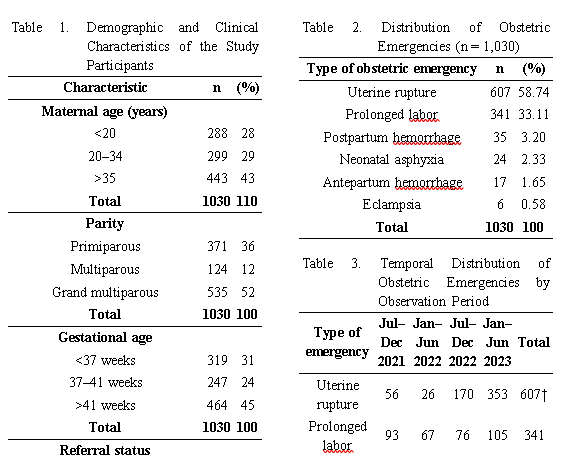
Results: A total of 1,030 obstetric emergency cases were included in the study. Uterine rupture was the most frequently encountered obstetric emergency (58.74%), followed by prolonged labor (33.11%), postpartum hemorrhage (3.20%), neonatal asphyxia (2.33%), antepartum hemorrhage (1.65%), and eclampsia (0.58%). The findings indicate that severe obstetric complications constituted a substantial proportion of emergency referrals managed at the hospital.
Conclusion: Uterine rupture and prolonged labor were the predominant obstetric emergencies encountered at this referral hospital. These findings highlight the importance of strengthening emergency obstetric services, improving referral systems, enhancing healthcare workers' competencies, and ensuring the availability of timely interventions to reduce maternal and neonatal morbidity and mortality.
Keywords: Maternal Health, Obstetric Emergency, Prolonged Labor, Referral Hospital, Uterine Rupture
Downloads
Published
How to Cite
Issue
Section
Citation Check
License
Copyright (c) 2026 Risna Mumpuni, Nining Loura Sari, Sujud Priono

This work is licensed under a Creative Commons Attribution 4.0 International License.
- The journal allows the author to hold the copyright of the article without restrictions.
- The journal allows the author(s) to retain publishing rights without restrictions.
- The legal formal aspect of journal publication accessibility refers to Creative Commons Attribution (CC BY).