The Effect of Digital Storytelling on the Level of Knowledge of Risky Sexual Behavior Among Adolescents
DOI:
https://doi.org/10.38040/js.v18i02.1504Abstract
Introduction: Adolescents are particularly vulnerable to risky sexual behaviors due to insufficient reproductive health knowledge. Digital storytelling has emerged as an innovative health education approach to improve adolescents' reproductive health knowledge. This study aimed to analyze the effect of digital storytelling on the level of knowledge of risky sexual behavior among adolescents.
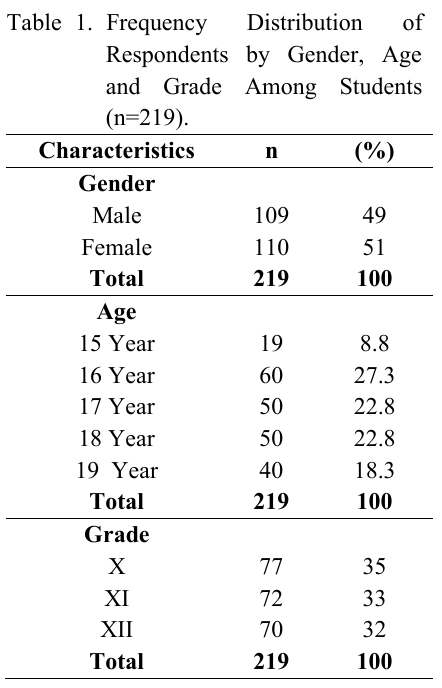
Methods: This pre-experimental study used a one-group pretest–posttest design. A total of 219 of 482 students at Persatuan Senior High School, Kedungpring, were selected through stratified random sampling. Participants received a 20-minute digital storytelling intervention. Data were collected using a validated 15-item true-or-false questionnaire and analyzed using the Wilcoxon signed-rank test.
Results: The results of this study show that before the digital storytelling intervention, most respondents (83%) had a moderate level of knowledge. After the intervention, almost all respondents (85%) had a good level of knowledge. Analysisi test with the Wilcoxon test showing a significant improvement (p = 0.001).
Conclusion: Digital storytelling is effective in improving adolescents’ knowledge of risky sexual behavior. This method is recommended as a creative and relevant strategy for health promotion among youth
Downloads
Published
How to Cite
Issue
Section
Citation Check
License
Copyright (c) 2026 Kholifatus Sadiyah, Siti Sholikah, Inta Susanti

This work is licensed under a Creative Commons Attribution 4.0 International License.
- The journal allows the author to hold the copyright of the article without restrictions.
- The journal allows the author(s) to retain publishing rights without restrictions.
- The legal formal aspect of journal publication accessibility refers to Creative Commons Attribution (CC BY).